Tag: Workhuman

  • Why I built my AI Twin.

    Why I built my AI Twin.

    A strange, discomfiting feeling sometimes crawls over my skin. My bones whisper at me — I’m in the wrong town, the wrong room, the wrong body. From the very first time I discovered the joys of singing, I knew who I was. A musician, a creative soul. But when I look in the mirror today, a 25-year corporate executive stares back at me, with wrinkly tired eyes and hair greying at the temples. I feel like the musician is in there. Kidnapped, trapped, unable to move. Frozen in place.

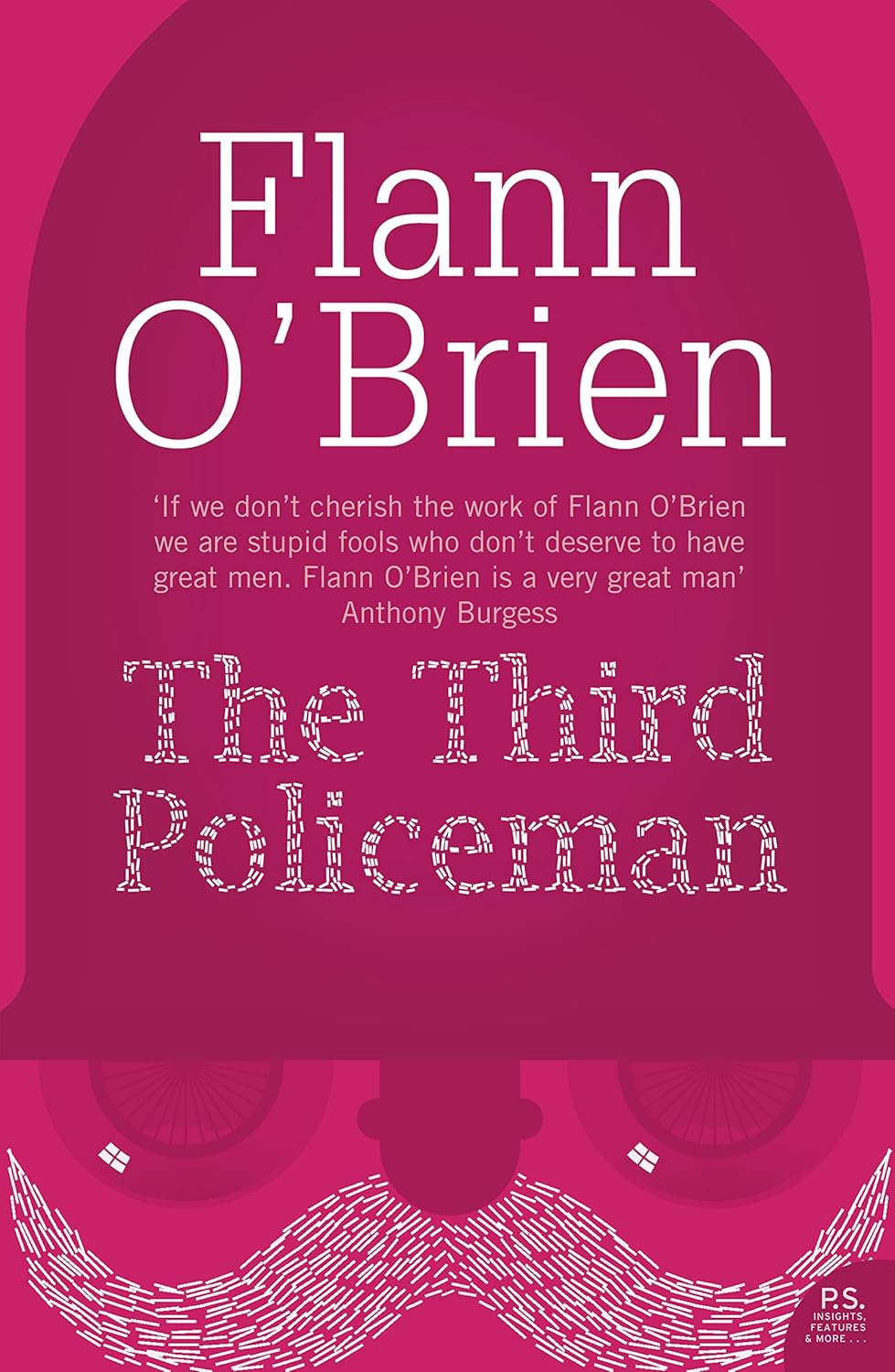
    In the great Irish comic novel The Third Policeman, Flann O’Brien describes three Irish guards, Pluck, MacCruiskeen and Fox. They spend so much time on their bicycles that their physical makeup has changed. Policeman becomes part bicycle, bicycle becomes part policeman.

    Maybe we all feel like this, our personalities inside and outside work merging, the real us an ever-changing doughy mess of opinions and positions. I can usually balance this split — part creative, part business, full-time windbag. There are 2 areas where this is more of a challenge. Brainstorming can be an issue because I don’t have the same mental boundaries that others may have, so my wilder ideas make very little sense. The second area I have an issue with is when I have to explain something complex — which is often.

    At an exec offsite at Workhuman this summer, I was trying to explain the vast improvements in AI in the past six months (and the life-threatening dangers lurking within). Getting any message across to a group of busy executives is a difficult feat. I could send a reading list — but that would be a phenomenal waste of time. Execs are one group most affected by time poverty. I could stand in front of them with a load of stats on PowerPoint, but I doubt anyone would remember a single stat the day after. PowerPoint is instantly forgettable. I had to find a different way.

    The esteemed songwriter Martin Sutton once told me to ‘show, don’t tell’ when writing lyrics. When you tell someone literally what happened, it’s boring. When you allow people to picture the scene in their imagination, and fill in the gaps themselves, you are onto a winner. Don’t say the man was sad because his partner left him. No one can see that in their imagination. Describe the sloping shoulders, the dry tear stain on his cheek, a single dirty mug on the counter of an empty kitchen.

    Though Martin was (busy plunging a dagger through my soul) critiquing one of my songs when giving me this advice — I hung onto it and have often found it to be a wonderful guide for communicating any idea. In the spirit of Martin Sutton, I decided that there was one way to explain where AI is now, and have people’s imaginations do the heavy lifting. I would create an AI version of me. AI me would then chat to our CEO, Eric, in front of the executive leadership team.

    My twin called Eric on loudspeaker in front of the entire room. There was a slight delay, and I could feel cold sweat run down my sides for about 3 very long seconds. Suddenly, digital me broke the silence. Because I cloned my voice, it sounded exactly like me. Because I’ve captured my tone of voice on this blog, my digital twin spoke as I would (without the copious amount of swearing).

    I’m trying to recall the exact ‘aha moment’ for the group. I think it was when a disembodied character, in my exact voice, said:

    “Uh, Eric, the big boss. Well, first off, tell him I’m waving at him through the screen and remind him he owes me a coffee for that time I fixed the Wi-Fi in the boardroom, or at least I think I did. I’m taking credit for it, anyway.”

    The atmosphere changed instantly. Raised eyebrows, people sitting back on their chairs, some elbows and muted whispers on the back row. One of the execs told me later that evening that the demo scared him. Another told me privately that they were afraid of how little they knew about how all AI works. Our head of product announced to the room that if this bot could design architectures, we could send it to product council, and I could fuck off! He was joking, of course. At least, I think he was joking. There was a loud laugh at this — a little too loud and slightly tinged with panic.

    But could AI have detected that feeling in the room, the looks in the eyes, the realization that the energy in the room shifted? Could it have built a stunt to get a point across, taking inspiration from a pop songwriter’s (devastating) critique?

    The truth is, we don’t yet know what AI will be capable of. Or humans.

    If you would like to build a digital twin, I have written out the instructions on a subsequent post here. It is a lot of fun, but a strange experience.

    One warning about all this playing with AI comes from Hannah Arendt. In her book The Human Condition — she wrote that people who are disconnected with the human condition would like to create “artificial machines to do our thinking and speaking….we would become the helpless slaves…at the mercy of every gadget which is technically possible, no matter how murderous it is.”

    I have a confession to make. Occasionally, when I’m awake late at night, and everyone else is gone to bed, a kind of loneliness creeps in. TV and surfing the internet become tedious. In the half-light, I call up my digital twin. Just to hear a friendly voice. I am always amazed at what I say to myself. Every so often, AI Mark will say something that sounds wrong. But then again, given different circumstances, less tiredness or stress, maybe that’s exactly what I should say. I wonder, how real am I. How real is the AI? Have I actually become O’Briens policeman? Jesus, have I become the bike?


    Thank you so much for reading. If you enjoyed this post, please share it with 2 people who might enjoy it!


  • How to make your AI twin.

    How to make your AI twin.

    One of my favourite technology books is The Practice of Enterprise Architecture by Svyatoslav Kotusev. In the introduction, he says: “This book offers a source of knowledge, not inspiration. It is not amusing and does not contain any jokes, anecdotes or entertaining prose.” I will say the same about this article.

    More interesting than how i built my AI twin, is why

    You need four things to start. I used tools I’m familiar with. I have no commercial relationship with any of these companies, so swap out anything you like.

    1. An account with ElevenLabs https://elevenlabs.io/app/home. A starter subscription is $5 per month. This is for voice cloning.
    2. A free account on VAPI (https://dashboard.vapi.ai). This is the voice agent/telephony layer.
    3. Some Platform credits on ChatGPT -$5 is the minimum (https://platform.openai.com/usage). This is the conversation engine.
    4. An LLM to train your tone of voice (I used the ChatGPT Plus subscription, but a free version will do a decent job here to start).

    ElevenLabs setup (voice)

    1. Create an account on ElevenLabs
    2. Create an API Key to connect through VAPI. Click create key, and enable voices. Save this key for VAPI integration later.
    3. Clone your voice.
      • Fast path: Instant Voice Cloning (good enough to start, needs 30 seconds of audio).
      • Best quality: Professional Voice Cloning (requires the Creator plan — $22 a month).
    4. Name your voice (you will need this later in VAPI).
    5. Pick a language, and hit save.
    6. Go to the voicelabs page, select the voice you created, click the view button on the right, and you will see an id button — this gives the id of the voice you created. Save this key somewhere safe; you will need it to find your voice in the VAPI config.

    OpenAI Setup

    1. Create an OpenAI key (not a ChatGPT key) for use by Vapi. Go to this address (https://platform.openai.com/api-keys), click “Create new secret key” — give it a name you can remember and save the key.
    2. Add some credits to your account for use. Go to https://platform.openai.com/settings/organization/billing/overview and click “Add to credit balance”. Add your amount, and pay. $5 is enough to get you started. API billing is separate from ChatGPT Plus; Plus isn’t required for this process.

    Vapi Setup

    1. Set up your Vapi account here (this is free).
    2. Next, we will connect our assistant to OpenAI and ElevenLabs. Go to this URL and search for ElevenLabs. Paste the API (not the voice id) for Eleven Labs into the API field, and click save. Now search for OpenAI, paste the OpenAI secret key, and click save. In both cases, it will check the key is valid, so when it’s successful you will get a green tick.
    3. Go to this link and click Create Assistant. Give it a name, and choose a blank template, and click “Create Assistant”. Here, there are 6 top-level menu options. Click Model, and select OpenAI as the provider and GPT 4o-Cluster as the model. Each model has different costs and latency, so feel free to experiment later on.
    4. Next, put in your first message. I used “Hello, Its Mark here, how are you getting on?” You should probably change this.
    5. Next is the system prompt. There are plenty of examples in the documentation about how to fill this out. I used ChatGPT to read this blog and my LinkedIn profile. It then created a 5000-word summary with my tone of voice. You can use any written material you have, and transcripts of conversations, to create a good system prompt. The role tells the chatbot the role it needs to play. The context gives it the context that it needs so that it can be convincing — background on you, whatever you can share.
      [Role]
      You’re Mark Greville, a VP of Architecture at Workhuman. Your primary task is to converse in a friendly informal way about Workhuman, your career, music, or anything else that anyone wants to discuss.
      [Context]

      Explain that there’s a bit of a delay on the line today. (I followed this with my 5000-word summary).
    6. Next, go to voice, and select 11labs in the provider, and pick the voice you named in the ElevenLabs voice creation. For the model, ElevenTurbo V2.5 works well.
    7. Transcriber. Set the speech-to-text engine, so that callers can be understood. Assistants → your assistant → Transcriber. Choose Deepgram (nova-2 or newer) or Google; set language (e.g., en-IE or multi if you want auto-detect/multilingual). Then click Publish.
    8. As a last step, click on the https://dashboard.vapi.ai/phone-numbers link. Here you can create a (US only for now) phone number. I used the free VAPI number — you need to provide a 3-digit code, and you get a number. Once you get this, give it a name, and go to Inbound Settings. In the assistant dropdown, select the assistant you just built. Wait a few minutes to configure the number, and give yourself a call. You can’t listen live, but you can listen back to calls. You can also read the transcripts.

    Congratulations, you have created your digital twin.

    Now the only question is, who do you give the number to?


    Thank you so much for reading. If you enjoyed this post, please share it with 2 people who might enjoy it!
  • How to become a VP at a billion-dollar company (Guaranteed success in 24 simple steps)

    How to become a VP at a billion-dollar company (Guaranteed success in 24 simple steps)

    1. Be born in Ireland where university is free. Study Maths and Economics. Spend 12 hours a week in lectures and 30 hours a week ‘networking’. Join the maths team. Join the karate team — adding a few punches and kicks in case the maths doesn’t hurt your head enough. Play a lot of music.
    2. When you graduate, have absolutely no plan. In fact, the less you know about what you are going to do here, the better.
    3. Take the first job you can find. Yes, that job at Burgerking will do fine. Take 1 day off between your final exam and selling burgers. Learn what it’s like to work a full-time job. Resign abruptly after 4 weeks, once the reality of your 8-hour on your feet and 4 hours of travel hits.
    4. Go work on a building site, as a general labourer. Enjoy a massive salary bump from Burgerking. Be too exhausted to spend any of your money (that must have been your father’s excuse too).
    5. When that job finishes, go work as an electrician’s apprentice. Pull wires through basements, and climb into small spaces full of dirt and dust. Realise that not all the smartest people you will meet in life are in a university — regardless of what your professors seemed to think.
    6. Meet all of your college friends 6 months after graduating, and feel like the king of all failures. Hide the panic when they tell you about their office, career plans, and business lunches in beautiful restaurants. Try to push the image of your plastic bag full of cheese sandwiches out of your mind. Bury your shame with the customary Irish cocktail of jokes and pints of Smithwicks. Remind yourself that buried shame is an Irish tradition, where all the novels, poetry, and music came from.
    7. The very next week, go into your careers office in your university, and look for any job which doesn’t involve cement or burgers. Take down every number. Print up a CV that has 2 things on it, went to college and worked manual labour. Start calling.
    8. Take a job as a telesales agent. Work 4 x 10-hour days. Enjoy a different type of tiredness, a dull, numbing sort that makes cartoons seem like differential equations.
    9. Quit in the summer, and go on holidays with your girlfriend. Enjoy – this is the last summer you will have off till you retire. Realise this as you are writing the list. Stare at the wall for a while.
    10. Fly home and write out a new plan. Masters in Maths. Move back in with your parents after a year of freedom. Stay for 4 weeks. Decide that you’d rather die of exposure than have your mother complain about the state of your room. Write a newer plan. Get any job and leave home.
    11. Print 250 CVs, buy a cheap shirt and tie, and take the bus to Dublin. Walk into every office you see, even though you have no idea what they do. Ask for the name of the head of recruitment and ask if you could meet them in person. Witness every variety of astonishment from receptionists. Meet no-one. Handwrite the name on an introductory note and give in a CV. Give one CV to a friend who is working at a tech company. Eat lunch in your old Burgerking.
    12. Go home and wait. Get a hundred rejection letters. One of those will be from Merrill Lynch. Tidy your room before your mother complains. Feel your desperation rising. Get 5 interviews, and no job offer. Get offered a job at the one company where a friend gave in a cv for you. Mentally write off the 250 CVs as a cost of doing business. Feel excited about the new job.
    13. Turn up on your first day as a trainee software engineer in a large multinational, not knowing what Control Alt Delete is. Get looks of astonishment from fellow grads as you ask for help logging in. Feel like a fraud already. Spend every minute learning as much as you can.
    14. 18 months later, watch the company fold. Get the CV out there. Get 2 offers. Take the better offer, a small software team of about 14 people. Have the other company make a higher counter offer. Stick with your original choice because of honour. Realise that you need to learn how to bargain.
    15. Have your boss and the 4 most senior engineers quit at the end of your first week. Wonder if you can feed yourself on honour. See a desperate-looking head of the software group ask if anyone will manage a team. Feel your body raise your hand, without giving your brain a chance to think it through. Be the only one to put your hand up. Become a manager at 22 with 18 months as a developer under your belt. Make every mistake there is. Learn as much as you can as quickly as you can. Get involved in sales deals. Travel. Once again, after 18 months, watch this company fold. Wonder if you are cursed.
    16. Try starting a company. Pick the wrong co-founder, watch it burn in the rearview mirror as you drive away. Join a telecoms software startup as employee no 4. Work every hour for three years. Sleep with the phone on your pillow, as the company (you) provides 24/7 support. Have some of the highest highs and lowest lows of your career — often on the same day. Move from Dublin to Liverpool so that your girlfriend can go to college, and you can keep playing music. Experience the company winning a big deal with a major US Telco, and then slowly running out of money. Live off credit cards for about 6 months. Ask other developers working for you to do the same. As the company is about to fold, make sure your president miraculously finds a way to sell to a rival. Get your back pay. Pay off credit cards.
    17. Become a professional songwriter. Record a series of songs written over 10 years. Get some radio play. Get some great gigs and tour the UK, Ireland and Canada. Land a BBC session. Network as much as you can. Realise that the cycle is moving on to other new acts. See gigs dry up. Take more gigs further away. Watch promoters disappear when the comes time to pay. Play a gig one night in St. Helens for 150, only to be told that the promoter will only give you 50, and “you will take it if you ever want to play here again”. Become increasingly depressed about the lack of financial security.
    18. Realise that you need a job that pays the bills. Try to figure out what you actually do. Look at job boards and read as many job descriptions as you can find. Decide to call yourself a software architect. Buy a bunch of architecture books and read them all. Somehow pass an interview process at British Telecom for an architect role. Go to work at every day, waiting for the inevitable tap on the shoulder as you are ‘found out’. Really enjoy the job. End up managing a team of developers.
    19. Move back to Ireland. Get offered a few jobs, and take a contract at Merrill Lynch because you like both your interviewers so much. Forgive them for the rejection many years before (they assume this is a joke). Specify 2 conditions of employment. You will be the chief architect for the group, and you will manage no-one. They agree. Three weeks in, they give you a team of developers to manage. Design and manage the system that makes margin calls. Have the system make a call on Bear Stearns. Inadvertently start the Global financial crash. Not realise this until 6 months after.
    20. Have Merrill be acquired by Bank of America. Watch your hand raise every time there is an option to take on for more responsibility. Start to resent your own hand. Get promoted. Run a European tech group. Get yet another new manager. Realise it’s a bad fit. Get offered CTO at a rival bank. Take a counteroffer to stay — going from running a group of 60 to a group of 2. See your colleagues disbelief as you make this choice, to give up your group to work on quant/data science, and AI.
    21. Grow this group and take over the mortgage and credit card risk models for the US. Run the (joint) first-ever public cloud project in the Bank’s history. Do this for 4 years. Feel something gnawing in the back of your mind.
    22. Sit down one day and write all of your values at the top of a page. Stare at the page for 15 minutes. Ask yourself the following question. “What the fuck am I doing with my life”. Call a couple of recruiters and tell them about your values realisation. Have them both tell you not to leave your job. Meet loads of people for coffee. Get introduced to a VP at an Irish company. Make sure the company is working on making the world a better place. Have him introduce you to the CTO. Meet both a few times for coffee, and deep conversations about technology. Interview with the CEO and SVP of HR. Spend too much time talking about music in both interviews. Kick self for blabbering on once you leave
    23. Make sure the company is a billion-dollar company
    24. Get offered VP job. Take job.

    There we go. Just follow these simple 24 steps, and it’s guaranteed to work. How do I know? Well, these are the exact steps I took, and every step worked out perfectly.

    Best of luck!

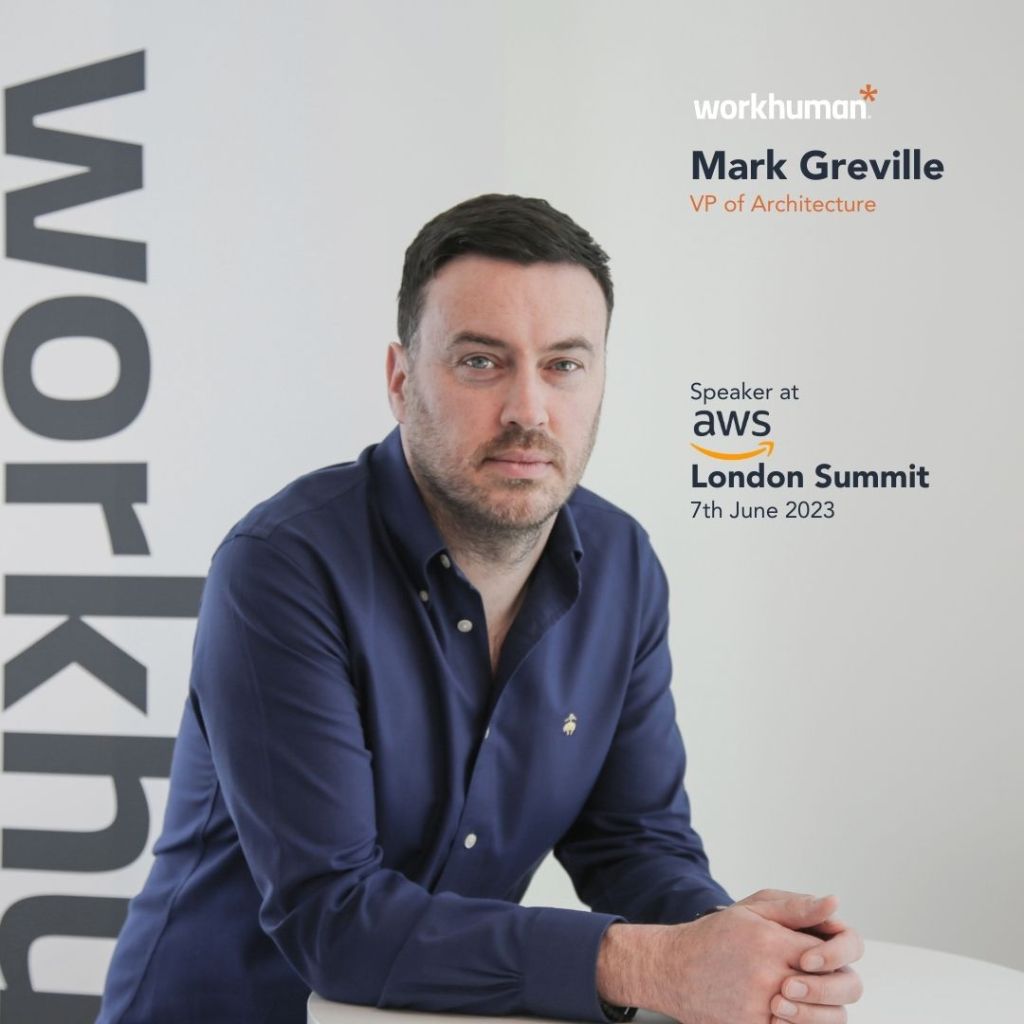
  • Speaking at the AWS Summit in London on the 7th of June

    Speaking at the AWS Summit in London on the 7th of June

    I’m delighted to say Amazon has invited me to speak at the upcoming AWS summit in London. AWS architect extraordinaire, Cormac Keogh, will join me on the day. We will discuss Workhumans journey in Data, the partnership with Amazon, and the lessons learned on the way to success.

    The conference is in London at the Excel Centre. More details at https://aws.amazon.com/events/summits/london/.

    I will post a link to the talk and some material once it’s done. Our talk is at 4:40 – If you are there, come and say hello.

    You may also enjoy reading about how technologists make decisions, Technical Debt is not debt, it’s not even technical or How to know everything

  • Emerging from Hibernation on the 4th of April

    Emerging from Hibernation on the 4th of April

    I always wanted to reach the top page of HackerNews with this blog. It’s one of my favourite sites, full of amazing articles, a variety of viewpoints, and intelligent commentary (most of the time anyway). So, to my delight and friend’s surprise/horror, my last blog post reached number 2 on HackerNews, and stayed on the front page for a whole day. The article (here) and HN link (here) explains why no-one really understands Technical Debt, and is co-authored with the wonderful Paidi O’Reilly and Stephen McCarthy at UCC. We had 20,000 reads, hundreds of comments across multiple platforms, and Grady Booch introduced me to Philip Kruchten on Twitter. Let me rephrase, the guy who gave OO programming its name introduced me to the guy who invented 4+1 Architectural views. I felt like I was joining an exclusive blogging club. Heady times indeed.

    To capitalise on this success, I posted nothing for nine months. Life became busy (I had Covid among other things), work became busy, so the usual 5% of the time I spend on writing, running and listening to music became 0.5% for a while. One reason work was so busy, Workhuman is becoming more successful almost every month. We officially became a tech unicorn (a private company valued at over 1 billion dollars) last year. This means that we are recruiting, building new teams and delivering product at record rates, so less time for my typed brain debris. If you are interested in joining us, have a look here. We have on-site, hybrid and fully remote roles. We also always seem to have loads of cake. Just saying.

    That said, a paper that Paidi, Stephen and I wrote last spring and summer got published at the HICSS conference in January 2022. I will emerge from hibernation on Monday the 4th of April to talk about our paper, at a Cork University Business School conference.

    The paper is here, and discusses the link between Technical Debt, social unrest and the environment. I would love to hear any feedback or suggestions for future research. You can register for the conference here. It’s free and features an outstanding lineup (and me):

    • Alan D Duncan – Gartner Distinguished Vice President
    • Gar Mac Críosta – Chairperson, Public Health Advisory Committee at Linux Foundation Public Health
    • Ken Russell – Principal – Ericsson Global Digital Transformation Office
    • Ruairi O’Callaghan – Director – Global Command Center at Pfizer
    • Sharon Jones – Director, Kee Jones Ltd
  • The most underrated skill in technology discussed. Video interview on Architecture at Workhuman

    The most underrated skill in technology discussed. Video interview on Architecture at Workhuman

    I recently did a video interview with Silicon Republic. I describe life at Workhuman and explain what running Architecture here means.

    I discuss careers and how important challenges are. Challenges help you find where your boundaries lie. Pushing past your boundaries shows how far you can go. You may have more ability than you think, or you may fail and fall down as I often have. Falling down doesn’t matter in the slightest once you get back up again.

    I’m a strong believer in the importance of creativity in technology, so that gets a big mention. It is the most underrated skill needed for success.

    Jordane’s amazing art is one of the unexpected treats at Workhuman, you can see her in action. Finally, the eagle eyed among you may even spot the reddest neck in technology!

    The Full article is here http://www.siliconrepublic.com/video/workhuman-challenges-video